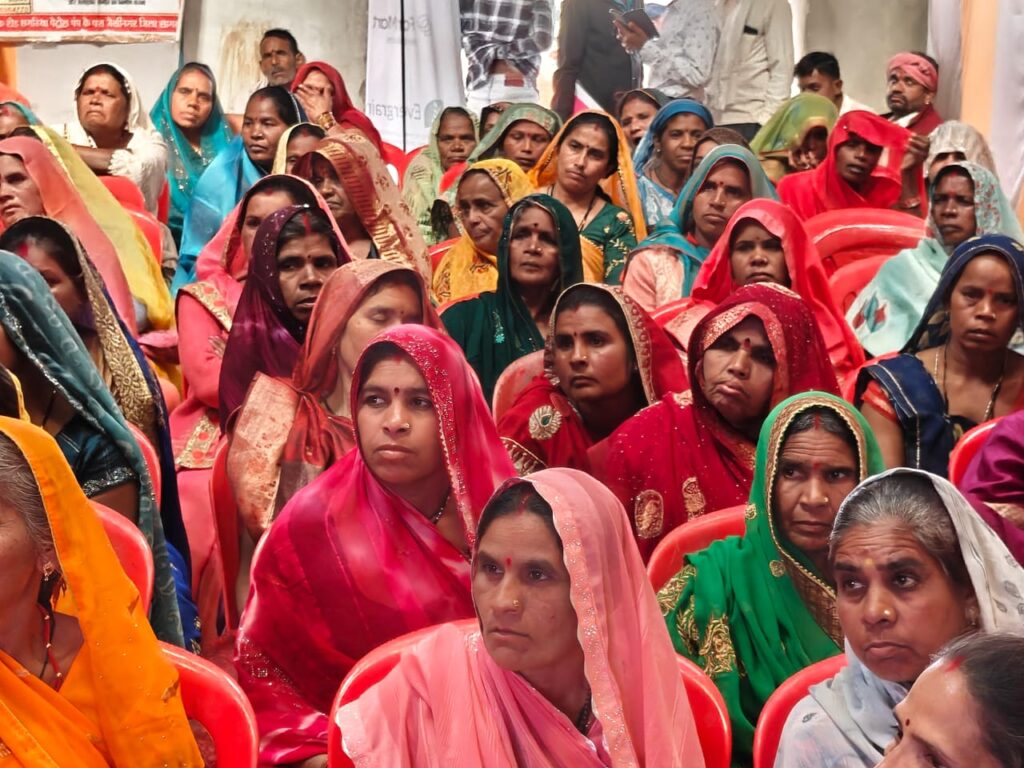
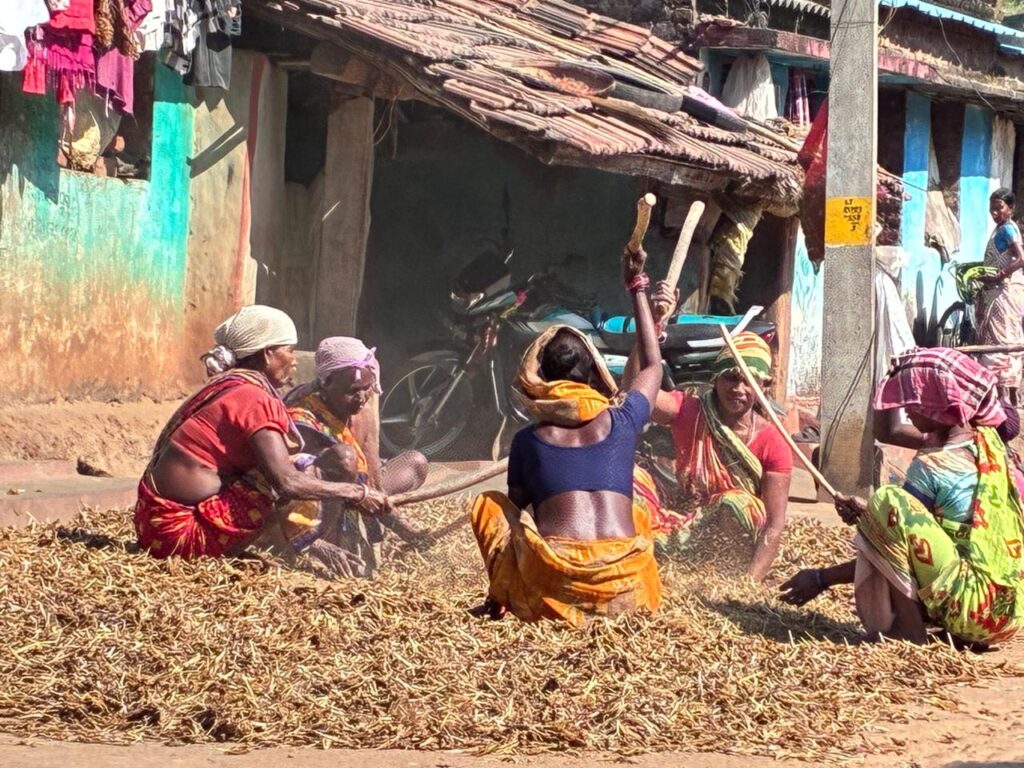
As India advances toward becoming a $5 trillion economy, the agriculture, food, and allied sectors remain the bedrock of rural prosperity contributing nearly 18% to national GDP and supporting around 45% of the workforce. Economic Survey 2025–26 highlighted that while agriculture has sustained a decadal growth rate of 4.45%, the composition of this growth is shifting as livestock (7.1%) and fisheries (8.8%) are significantly outpacing the crop sector (3.5%), signalling a move toward more diversified and high-value food systems. At the same time, with nearly 80% of farmers being small and marginal, and the share of women in agriculture rising from 57% (2017–18) to 64.4% (2023–24), the sector is becoming increasingly representative of India’s most vulnerable yet vital communities.
India is also building the world’s largest Digital Agriculture Infrastructure, with over 90 million farmers already onboarded with digital identities, helping bridge the ‘phygital’ divide. Coupled with a growing emphasis on natural farming, food processing, and allied sectors, along with strong export momentum, India’s food system is poised for a future that is decentralised, technology-enabled, and entrepreneur-driven.
The conference, co-hosted by Ecociate and IBEN, is designed to move the needle from participation to partnership. The key objectives of the Inclusive Growth Conference are :
India has successfully fostered one of the world’s most robust networks of community-owned institutions, transitioning from individual subsistence to collective enterprise. Today, India boasts over 10,000 Farmer-Producer Organisations (FPOs), empowering millions of smallholders with greater bargaining power and market linkages. This is further bolstered by the monumental success of the Self-Help Group (SHG) movement, which now encompasses nearly 10 million groups and over 100 million women, effectively becoming the backbone of rural credit and entrepreneurship. The revitalisation of the Cooperative sector, supported by a dedicated Ministry, manages a vast network of over 8.5 lakh cooperatives—ranging from primary credit societies to world-class dairy and fertiliser federations. By leveraging these existing community assets, India is uniquely positioned to turn top-down economic momentum into a bottom-up revolution of shared prosperity. India’s unparalleled strength in Social Capital serves as the foundational architecture for inclusive growth.
This transformation brings a critical imperative: Growth must not only be measured by GDP, but also by its ability to be inclusive, resilient, and sustainable. Ensuring that this progress meaningfully benefits smallholder farmers, women, rural entrepreneurs, and vulnerable communities, while safeguarding our already stressed ecological systems.
Achieving this requires:
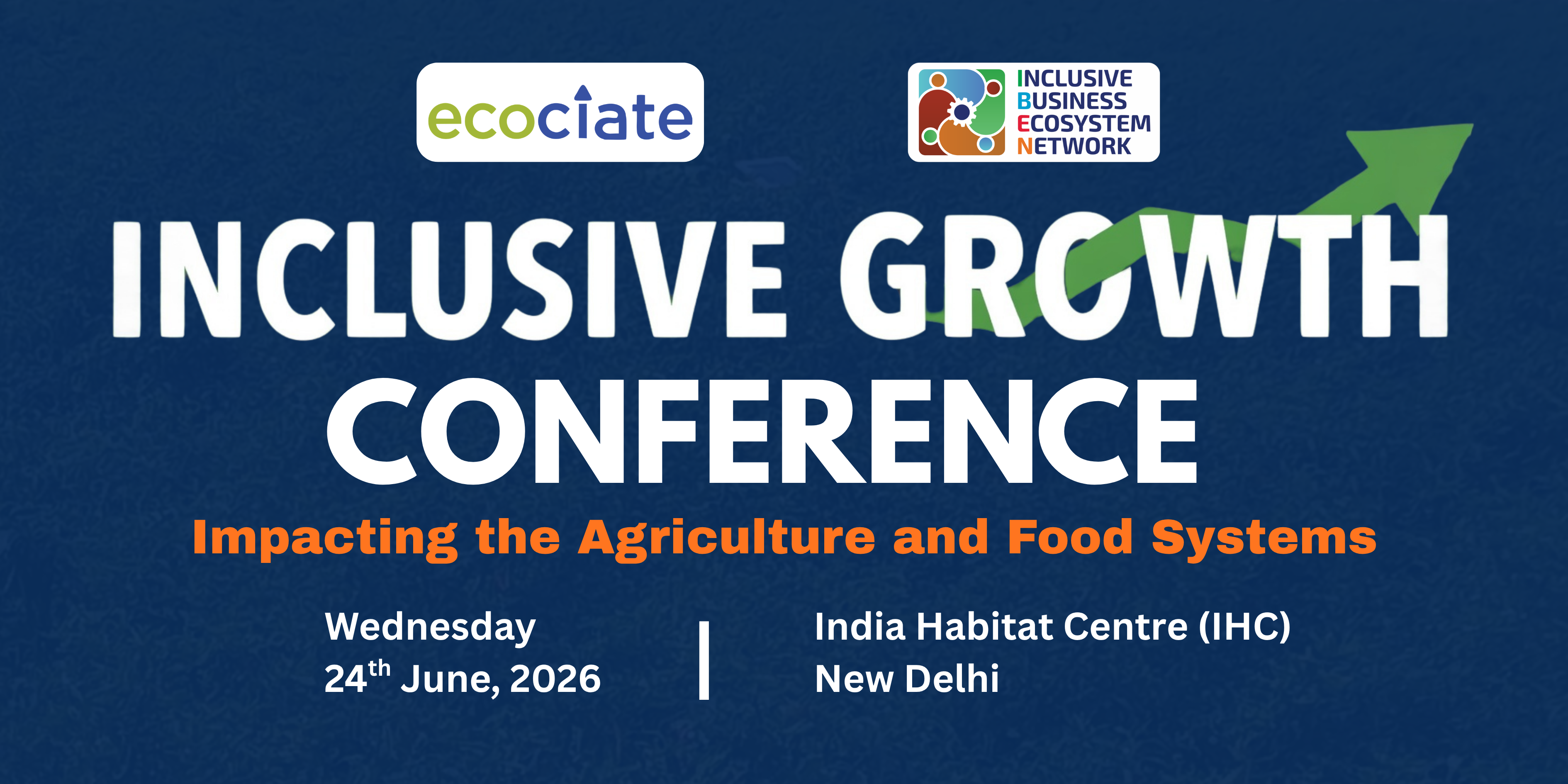
In this context, we are pleased to announce the Inclusive Growth Conference 2026 – Impacting Agriculture and Food Systems for a Resilient Future, scheduled for 24th June 2026 at the India Habitat Centre (IHC), New Delhi. This conference is envisioned as a high-impact platform to bring together sector leaders, policymakers, businesses, FPOs, and development practitioners to co-create practical, scalable, and inclusive solutions for the future of India’s agriculture and food systems.
Join us to discuss, debate, deliberate, and design sustainable solutions for these issues. Let’s celebrate the success of legendary individuals and phenomenal organizations as we work together to shape a brighter future for Indian agriculture.
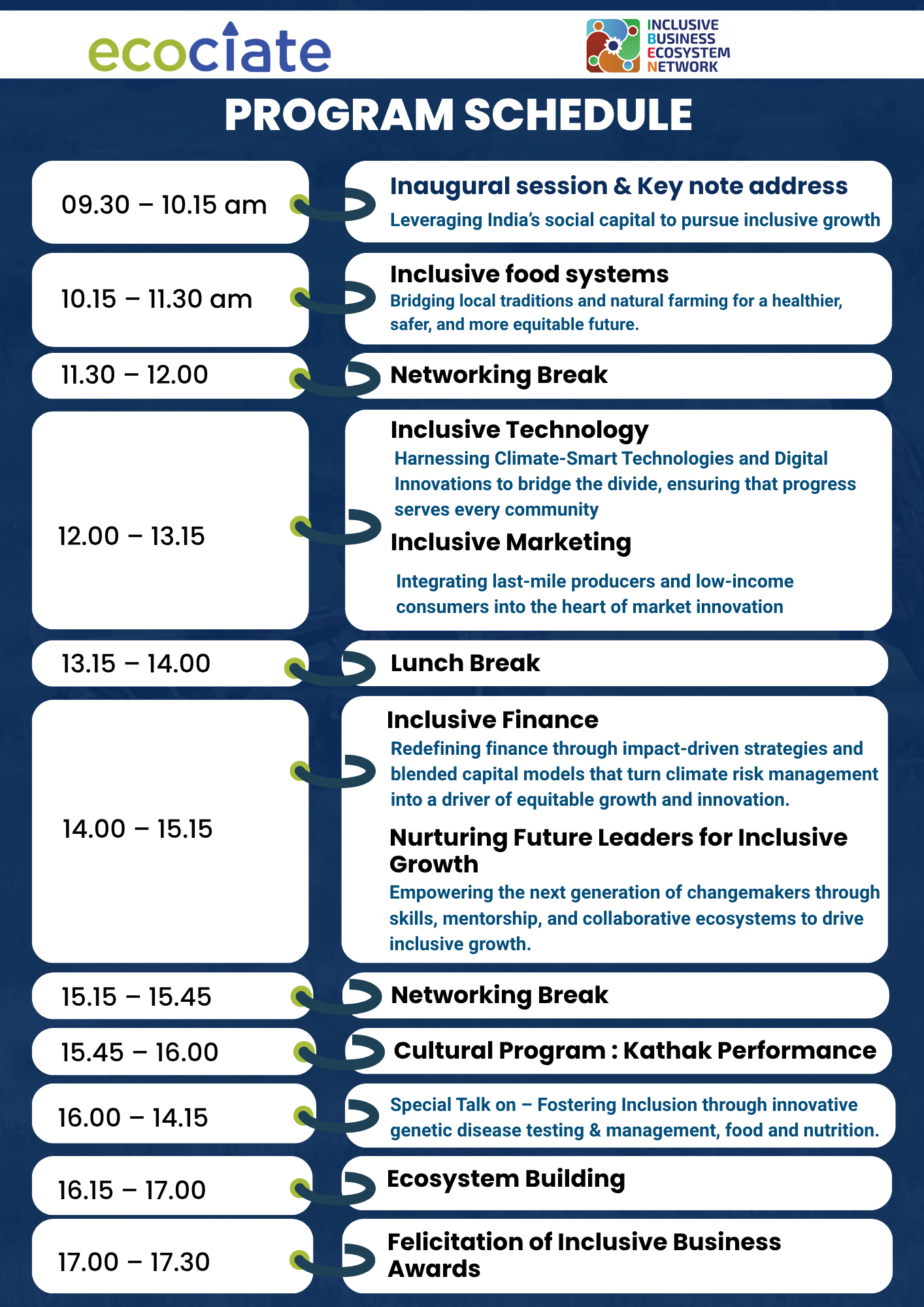
This session will set the context of workshop along with key notes from sectoral leaders from Government and private sector. This session will focus on leveraging the India’s vast social capital for partnership with private sector players for an inclusive growth
This session will focus on the different layers of food systems transformation from highlighting local food entrepreneurs who are bringing indigenous crops (like millets and local pulses) to urban markets, enterprises reducing food losses and wastage. We will discuss how processing food closer to the farm can create jobs, reduce waste, and preserve local food traditions while meeting modern safety standards.
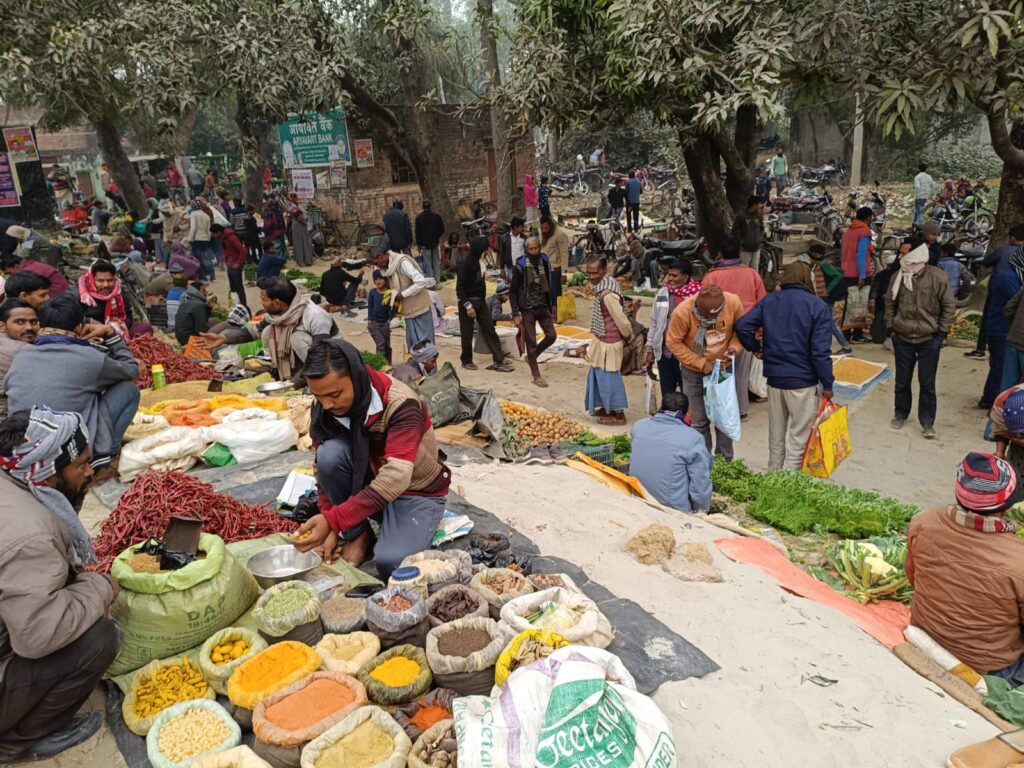
This theme focuses on making markets work for the smallholders. We will explore how to modernize rural haats (local markets) and use digital platforms to connect them directly to buyers and consumers. We would also be exploring different inclusive market mechanism for sourcing and distribution of the goods and services. The goal is to highlight the ‘market mechanisms which not only economically benefit the smallholders but also reduces ecological foot prints.
Climate change hits small farms the hardest. This session is about "democratizing" technology, ensuring that tools like AI-driven weather alerts, solar-powered storage, and water-saving sensors are affordable for every farmer. We will focus on "frugal innovation" that helps smallholders stay resilient without high costs.
Money is the "fuel" for all the above themes. This track explores new ways to provide credit and insurance to farmers who lack traditional collateral. We will look at "Digital Credit Scoring" (using satellite data instead of bank history) and blended finance models that make it easier for FPOs and small agri-businesses to grow. We will also be exploring the impact focused investments supporting inclusive enterprises to scale their solutions.
The next generation of changemakers will play a vital role in advancing India’s inclusive growth journey. With the right skills, exposure, mentorship, and collaborative platforms, young professionals can drive innovative solutions for food systems, livelihoods, climate resilience, and rural development. This session will explore how academia, industry, development organisations, and impact enterprises can work together to nurture future leaders with practical knowledge, entrepreneurial thinking, and a strong commitment to social and environmental impact.
We will recognize and honor businesses that have successfully balanced "profit with purpose." These awards celebrate companies and entrepreneurs who have made a real difference in the lives of farmers while building strong, successful businesses.
The conference centres on four interconnected pillars: Inclusive Marketing, Inclusive Tech, Inclusive Investment, and Inclusive Food Systems. Together, these drivers reshape the agricultural landscape, with Social Inclusion serving as the critical benchmark for success. Inclusive Marketing generates the demand necessary to reward both producers and consumers, while Inclusive Food Systems ensure these market links promote local nutrition and boost rural food-entrepreneurship. This transition is strengthened by Inclusive Tech, utilising climate-smart innovations to bolster productivity and resilience. To fuel this at scale, Inclusive Investment provides the resources required for long-term sustainability. Ultimately, the above themes are ensured by two vital outcomes – Social Inclusion, which ensures that marginalized groups are the primary architects of innovation, and Inclusivity
Measurement, which provides the rigorous data needed to track, validate, and continuously improve our impact.
Leveraging social capital for inclusive growth
This session will set the context of workshop along with key notes from sectoral leaders from Government and private sector. This session will focus on leveraging the India’s vast social capital for partnership with private sector players for an inclusive growth Key voices
Key note address by two leaders from social and business sector.
Inclusive Food Systems
This session will focus on the different layers of food systems transformation from highlighting local food entrepreneurs who are bringing indigenous crops (like millets and local pulses) to urban markets, enterprises reducing food losses and wastage. We will discuss how processing food closer to the farm can create jobs, reduce waste, and preserve local food traditions while meeting modern safety standards.
Key voices– Founders of local food brands, nutritionists, and experts in decentralized food processing.
Inclusive Markets
This theme focuses on making markets work for the smallholders. We will explore how to modernize rural haats (local markets) and use digital platforms to connect them directly to buyers and consumers. We would also be exploring different inclusive market mechanism for sourcing and distribution of the goods and services. The goal is to highlight the ‘market mechanisms which not only economically benefit the smallholders but also reduces ecological foot prints.
Key voices– Leaders from NRLM, supply chain heads from leading companies, and founders of Agri-logistics startups, Grassroot innovators
Inclusive Climate Technologies
Climate change hits small farms the hardest. This session is about & democratizing & technology, ensuring that tools like AI-driven weather alerts, solar-powered storage, and water-saving sensors are affordable for every farmer. We will focus on & frugal innovation & that helps smallholders stay resilient without high costs.
Key voices– Climate tech innovators, Startups researchers, and specialists in low-cost digital tools.
Inclusive Finance
Money is the “fuel” for all the above themes. This track explores new ways to provide credit and insurance to farmers who lack traditional collateral. We will look at “Digital Credit Scoring” (using satellite data instead of bank history) and blended finance models
that make it easier for FPOs and small agri-businesses to grow. We will also be exploring the impact focused investments supporting inclusive enterprises to scale their solutions.
Key voices– Leaders from financial institutions, social impact investors, venture funds and pioneers in Agri-Financing domain
Nurturing Future Leaders for Inclusive Growth
The next generation of changemakers will play a vital role in advancing India’s inclusive growth journey. With the right skills, exposure, mentorship, and collaborative platforms, young professionals can drive innovative solutions for food systems, livelihoods, climate resilience, and rural development. This session will explore how academia, industry, development organisations, and impact enterprises can work together to nurture future leaders with practical knowledge, entrepreneurial thinking, and a strong commitment to social and environmental impact.
Key voices– Academic leaders, social enterprises, youth networks, and industry leaders working on innovation and inclusive development

Special Session
We will recognize and honor businesses that have successfully balanced “profit with purpose.” These awards celebrate companies and entrepreneurs who have made a real difference in the lives of farmers while building strong, successful businesses.
This session will bring leaders from different sectors to have a focused discussion on the practical pathways, policies and initiatives to build an Ecosystem for inclusive growth in India. The session will focus on both policy and private sector measures

Venue
Wednesday, 24th June 2026

+91 8128685155; +91 9873677278 | Email : admin@ecociate.com

Sign Up The Form, Our Team Will Contact You Soon!